
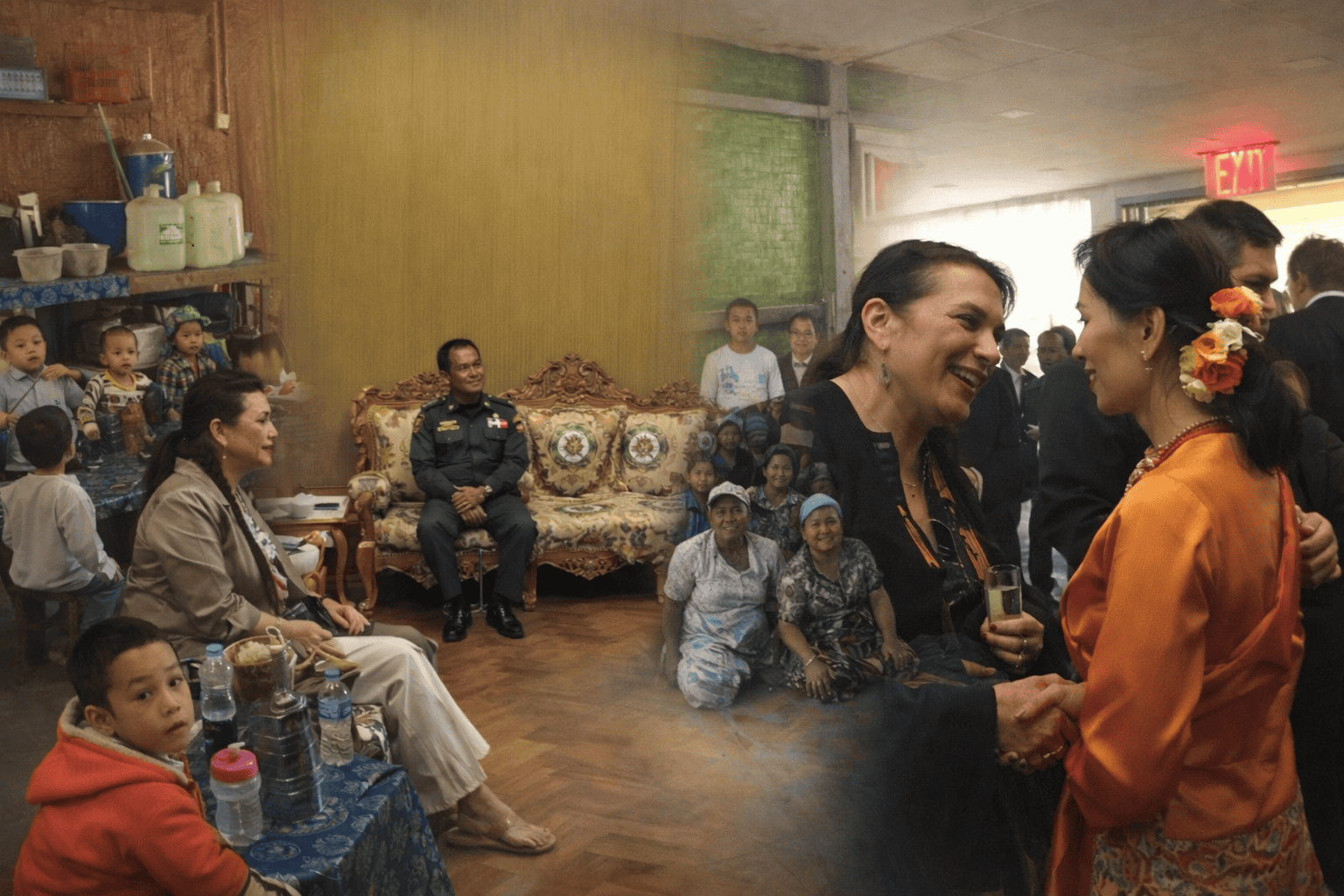
Elections are being held in Myanmar today. Yet to understand their significance—and above all their limits—one must look back at the country’s recent history and the deep wounds that remain unhealed.
I first visited Myanmar in 2016, when I was serving as Director for Humanitarian Aid of the European Union, with responsibility for Africa, Asia, and Latin America. Already then, the conditions were taking shape that would lead, in August 2017, to the mass persecution and exodus of the Rohingya.
The Rohingya are a Muslim minority that has lived for generations mainly in Rakhine State, in western Myanmar. Rakhine is predominantly Buddhist, as is the country as a whole, and the Rohingya have for decades been pushed to the margins—often without full recognition of citizenship and facing severe restrictions on freedom of movement, access to services, and basic rights. This underlying pattern of exclusion made the community particularly vulnerable when hate rhetoric began to intensify.
In August 2017, following military operations in Rakhine State, more than 700,000 people fled within a few weeks to neighboring Bangladesh. Bangladesh initially hesitated to open its borders, but under strong international pressure it did so. Approximately 600,000–800,000 refugees ended up in the Cox’s Bazar area, one of the poorest regions of the country.
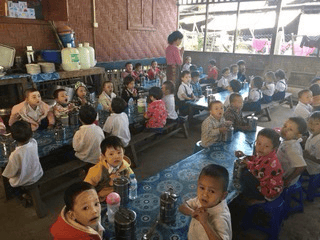
There, in a place of great natural beauty but extreme economic fragility, shelter, food, and basic services suddenly had to be provided for hundreds of thousands of people. The burden fell—as almost always—on a developing country with limited resources. This is a reminder that the overwhelming majority of refugees worldwide are hosted by poor or middle-income countries, not by those with the greatest capacity to respond.
Yet the violence against the Rohingya did not arise “suddenly.” It was preceded by a systematic campaign of dehumanization. Social media—and Facebook in particular—played a documented role in spreading hate speech, portraying the Rohingya as “foreigners” and a “threat.” This occurred in an environment of explosive and uncontrolled expansion of the platform: in less than a decade, Facebook became synonymous with the internet itself for millions of citizens, without parallel investment in digital literacy and without adequate education in identifying false news. In this context, disinformation and hate campaigns could spread faster than society’s ability to filter them.
Lawsuits have been filed against Meta (Facebook) in various jurisdictions, examining whether the platform, through algorithmic amplification and failure to intervene in a timely manner, contributed to facilitating crimes against the Rohingya. These cases are still ongoing.
It is also necessary to recognize that responsibility does not lie exclusively with the military. Aung San Suu Kyi, daughter of the founder of modern Myanmar and for decades a symbol of the democratic struggle, assumed the country’s political leadership after 2015, after spending a total of around 15 years under house arrest and imprisonment, and she had long been a global symbol of democracy. Yet Aung San Suu Kyi also failed to halt—and at critical moments contributed to legitimizing—narratives that portrayed the Rohingya as “foreigners” or as a threat.
The same pattern was repeated elsewhere in Myanmar. In Kachin State, in the northeast of the country on the border with China, Christian communities were targeted, displaced, and collectively punished by the military. This is a region of enormous mineral wealth—particularly jade and other valuable minerals—which for decades has fueled conflict, military presence, and economic interests. I have visited the area, met these communities, and negotiated humanitarian access with senior military commanders.
In October 2017, just a few months after the mass expulsion of the Rohingya, the European Union, together with other international partners, organized a Donors’ Conference in Geneva to finance the humanitarian response. Pressure on Bangladesh was intense, and assurances were clear: that the international community would support the hosting and care of refugees. Over the years, however, it became evident that many of these promises were not fully delivered.
Today’s elections in Myanmar cannot be considered either free or genuinely legitimizing. When a state has built its power on violence, impunity, and the dehumanization of entire communities, the ballot box functions more as a fig leaf than as a path to democracy.
Lessons from Myanmar:
- Unregulated social media are dangerous.
- Developing countries bear the greatest burden of refugee crises.
- The international humanitarian system needs better coordination.
- Even symbols of democracy can prove inadequate.
- The existence of mineral wealth can often be a curse rather than a blessing.
- The targeting of “the other” and hate rhetoric are extremely dangerous.
Androulla Kaminara
Former EU Ambassador
Parliamentary Candidate with Alma in NicosiaKaminara.com
@AKaminara


